
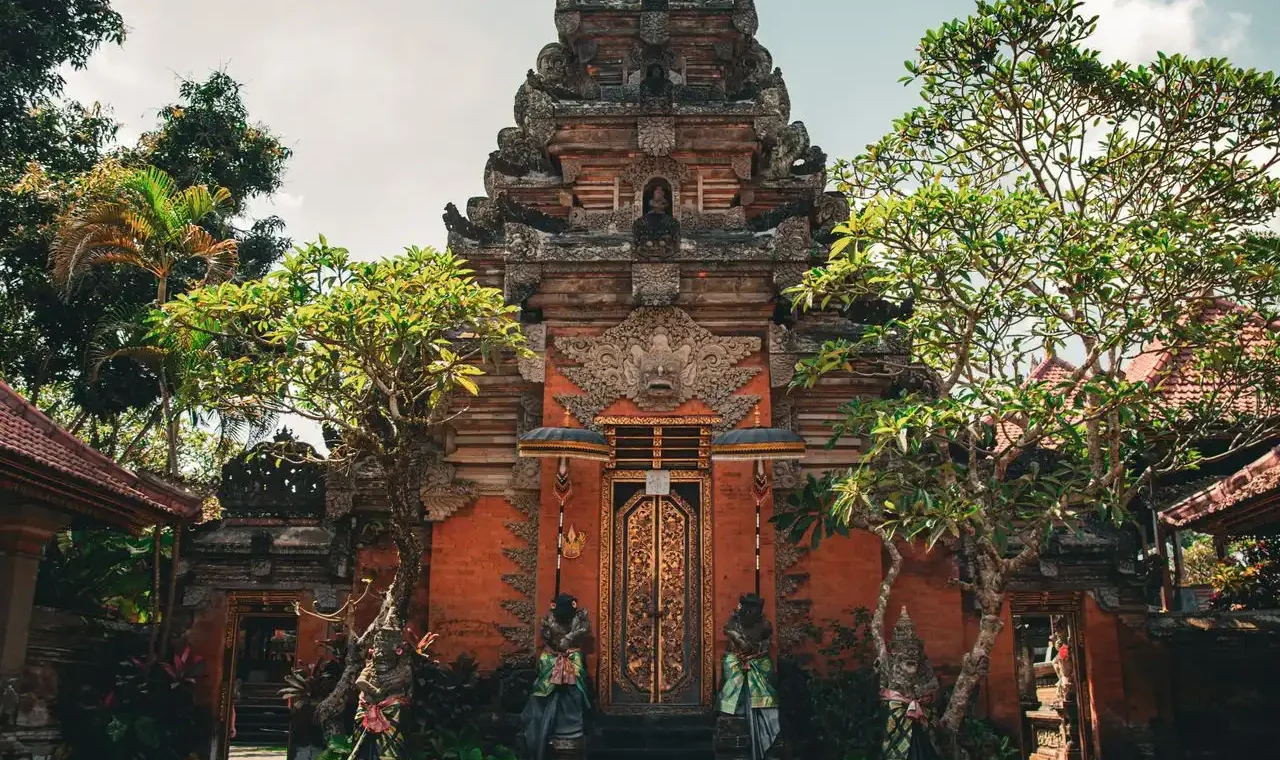
A Bali Taman Ayun Temple guide should do more than tell you where the temple is. The real value is learning how to read the site. Taman Ayun is a royal water temple in Mengwi where gardens, moats, courtyards, and meru towers work together to create a feeling of distance, order, and protection.
That makes it useful for travelers who want a calmer temple visit. You do not need to rush from gate to gate. The temple becomes clearer when you let the water and layout lead the pace.

Read the Temple Through Water
The moat around Taman Ayun is not just decoration. It shapes how visitors approach the temple, separating the sacred compound from the surrounding world. Water softens the view, slows the eye, and makes the inner shrines feel protected.
For a visitor, this changes the experience. You are not only looking at architecture. You are seeing how Balinese temple design can use landscape to create respect before anyone even reaches the central area.
Why Mengwi Matters
Taman Ayun is tied to the historical kingdom of Mengwi, and that royal background explains its scale. The temple was not built as a roadside stop. It served a royal and communal purpose, with a design that expresses status, devotion, and balance.
Knowing this helps you avoid treating the temple like a quick add-on. It belongs to a deeper local story, and its quietness is part of its strength.
Details Worth Slowing Down For
– The moat frames the compound and gives the temple a floating impression.
– The meru towers create a layered skyline inside the sacred zone.
– The gardens make the visit feel open before the restricted inner area.
– The gates and walls show how movement is guided, not random.
– The visitor path lets you observe worship space without entering every part of it.
How It Differs From Tirta Empul
Travelers sometimes group Bali’s water temples together, but Taman Ayun and Tirta Empul offer different experiences. Tirta Empul is known for purification pools and active bathing rituals. Taman Ayun is more about royal design, protected courtyards, garden space, and symbolic separation.
If you want to participate in or observe purification, Tirta Empul may be the stronger fit. If you want architecture, calm grounds, and a gentler introduction to temple layout, Taman Ayun is easier to appreciate slowly.
Best Visitor Fit
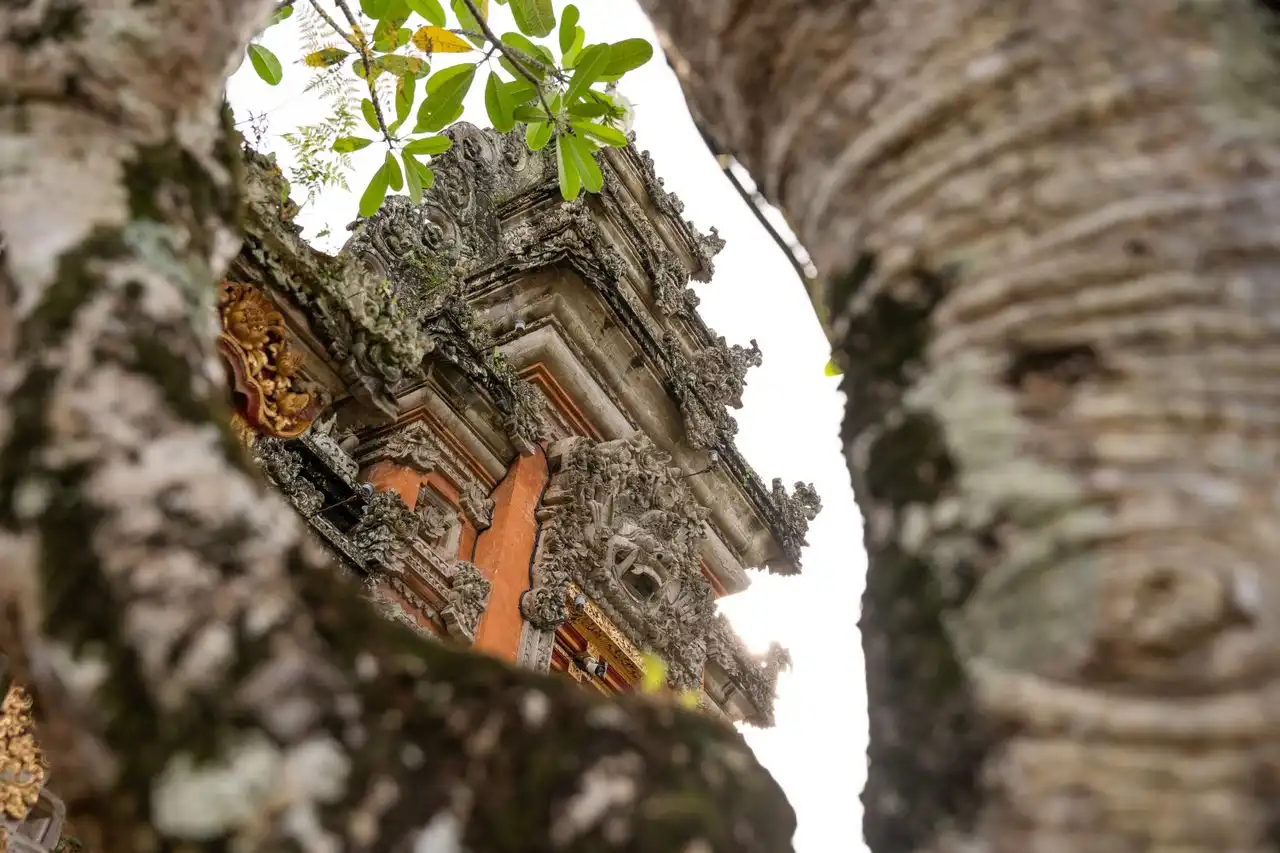
Taman Ayun works well for first-time visitors, families, architecture lovers, and travelers who do not want a physically demanding stop. It is also a good choice when you need a cultural visit between busier areas of Bali.
The best way to experience it is to arrive without rushing. Walk the perimeter, notice how the water changes the mood, and treat the restricted areas as part of the meaning rather than a limitation. That shift makes Taman Ayun feel less like a checklist temple and more like a place with its own rhythm.